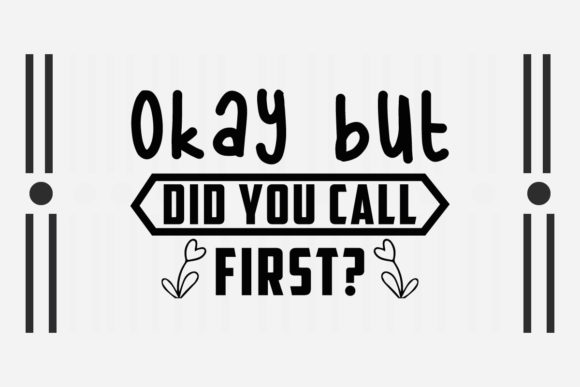
Reviewing Okay but Did You Call First Svg for Stitching
As a designer who has spent years translating digital concepts into tangible thread, I have learned that not every cute graphic translates well to fabric. When I first encountered Okay but Did You Call First Svg, my initial reaction was one of amusement mixed with professional caution. The phrase carries a specific, sassy energy that resonates deeply in today’s social landscape, making it a prime candidate for personalized gifts and boutique merchandise. However, the transition from a vector file to a stitched reality requires careful consideration of layout, density, and fabric choice.
This design falls squarely into the Crafts and Graphics categories, offering versatility for various applications. But for us embroidery professionals, the question is not just whether it looks good on a screen, but how it holds up under the needle. Let’s break down how this asset performs in real-world scenarios, from custom apparel to home decor.
The Visual Personality and First Impressions
The mood of Okay but Did You Call First Svg is undeniably conversational. It is not a passive design; it demands attention. Visually, the typography likely leans towards clean, readable lines to ensure the joke lands instantly. In embroidery, legibility is paramount. If the letters are too thin or the spacing too tight, the thread buildup can obscure the message. My first impression suggests this design works best when treated as a statement piece rather than a subtle accent. It belongs on items where the wearer or user wants to project confidence and humor.
For small business owners and Etsy sellers, this type of quote-driven design is a staple. It drives engagement because it invites a reaction. When I visualize this on a finished product, I see it working exceptionally well on casual wear and home goods. It is not formal, so it should not be placed on high-end corporate attire. Instead, it thrives in relaxed, personal contexts.
Real-World Application: The Custom Tote Bag Scenario
Let’s consider a practical case study. Imagine a client requests a custom embroidered tote bag for a birthday gift. They want something funny but stylish. Okay but Did You Call First Svg is a strong contender here. Canvas tote bags provide a stable, woven surface that handles stitch density well. The texture of the canvas allows the thread to sit prominently without sinking in, ensuring the text remains crisp.
In this scenario, I would recommend using a satin stitch for smaller elements if the design permits, or a dense fill stitch for larger letters to create a bold, tactile feel. The contrast between the thread colors and the natural beige or white canvas is crucial. Since the product description notes that the file is 100% color changeable, you have the freedom to test various palettes. A bright coral or electric blue against a neutral background creates a modern, eye-catching look that appeals to younger demographics.
However, if you are moving beyond totes to sweatshirt embroidery, the dynamics change. Sweatshirts are thicker and often have a fleece lining. Here, the design must be scaled appropriately. If the text is too small, it may get lost in the pile of the fabric. I advise creating a printable mockup at actual size and placing it on the garment before digitizing or stitching. This helps verify that the proportions feel balanced on the chest or sleeve.
Navigating Fabric and Hoop Constraints
One of the most critical aspects of using any SVG-derived embroidery file is understanding its limitations on difficult surfaces. While Okay but Did You Call First Svg is ready to print and easy to modify, embroidery adds physical constraints. For instance, applying this design to a cap requires a curved surface approach. The text might need to be arched slightly to follow the contour of the front panel. Without proper adjustment, straight text can appear distorted once stitched onto a rounded hat.
Additionally, consider the hoop size. If you are working with a standard 4x4 inch hoop, you must ensure the entire phrase fits comfortably within the boundaries, leaving room for stabilization. Stretchy fabrics like jersey knits used in t-shirts require a cut-away stabilizer to prevent puckering. The weight of the thread can pull lightweight fabric out of shape if not properly supported. Always test the design on scrap fabric first. This simple step saves hours of frustration and prevents ruined client garments.
Dark fabrics present another challenge. If you are stitching light-colored thread on a black hoodie, you may need an underlay stitch or a backing patch to prevent the dark fabric from showing through the gaps in the lettering. This is where the "easy change color" feature becomes vital. You can simulate the contrast in your software before committing to the machine.
Commercial Viability and Brand Consistency
For craft business owners, consistency is key. Using Okay but Did You Call First Svg across a product line—such as matching aprons, tea towels, and pillow covers—can create a cohesive brand identity. The humor is relatable, which builds customer trust and encourages social sharing. When a buyer receives a handmade product that makes them laugh, they are more likely to leave a positive review and return for future purchases.
However, professionalism matters. Ensure that the stitch density is optimized. Overly dense stitching can make the fabric stiff and uncomfortable, especially on items like baby clothes or blankets. Conversely, too little density can look cheap and allow the fabric to show through excessively. Finding the balance ensures the finished product feels high-quality and durable.
Since the file includes source files in EPS or SVG formats, you have the flexibility to tweak the design before converting it into a machine embroidery design. This is a significant advantage. You can adjust kerning, resize elements, or add decorative flourishes like small stars or hearts to soften the tone if needed. Just remember that every modification requires re-digitizing or adjusting the stitch path to maintain clarity.
Final Designer Notes
Before launching this design in your small shop product lineup, consider these practical steps:
- Check Licensing: Confirm whether the license allows for commercial use of finished physical items. Most SVG licenses permit selling physical goods but restrict reselling the digital file itself.
- Test Thread Contrast: Use high-contrast thread colors to maximize readability, especially from a distance.
- Evaluate Washability: Ensure the stitches are secure enough to withstand frequent washing, particularly for kitchen towels and aprons.
- Mockup Variations: Create digital previews on both light and dark backgrounds to help customers visualize the final result.
In conclusion, Okay but Did You Call First Svg is a versatile and engaging asset for the modern maker. It bridges the gap between digital convenience and tactile craftsmanship. By paying attention to fabric texture, stabilizer choice, and stitch optimization, you can transform this simple quote into a standout piece of custom apparel or home decor. It is not just about stitching words; it is about delivering a moment of connection through your craft.