Reviewing the Advanced Registered Nurse Practitioner SVG for Embroidery
As a designer who has spent countless hours digitizing and testing files for real-world application, I approach every new machine embroidery design with a critical eye. It is not enough for a graphic to look good on a screen; it must survive the needle, the thread tension, and the wash cycle. Recently, I evaluated the Advanced Registered Nurse Practioner Svg to determine its viability for professional craft projects. This is not just a digital asset; it is a potential centerpiece for custom apparel and handmade goods.
First Impressions and Visual Personality
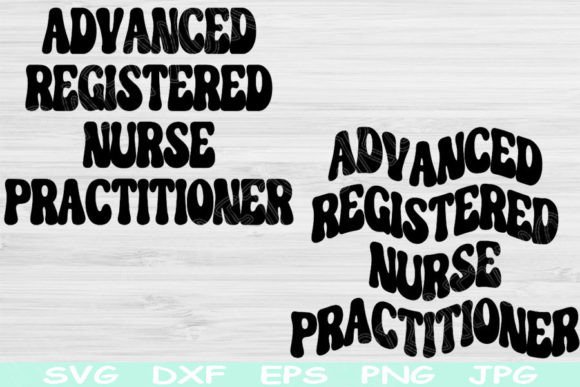
The first thing that strikes you about this design is its clean, modern aesthetic. The inclusion of a wave element alongside the text adds a sense of movement and calm, which is thematically appropriate for healthcare professionals who often work in high-stress environments. From a layout perspective, the balance between the typography and the graphical wave suggests a design intended for clarity rather than excessive ornamentation.
For those of us in the Crafts and Graphics space, we know that simplicity often translates better to stitching. Complex gradients and tiny details can get lost in thread. This design appears to prioritize legibility, making it a strong candidate for items where the message needs to be read quickly, such as on a tote bag or a clinic apron. The mood is professional yet approachable, striking the right tone for a nurse practitioner who wants to display their credential with pride without appearing overly clinical.
Real-World Application: The Custom Sweatshirt Test
To truly understand how an embroidery file performs, I mentally walk through a typical client request. Imagine a local nursing student or a practicing NP wanting a high-quality sweatshirt embroidery piece for clinical rotations. They need something durable, professional, and comfortable.
Using the Advanced Registered Nurse Practioner Svg on a mid-weight cotton blend sweatshirt would likely yield excellent results. The wave element provides a nice visual break from standard block text, adding a touch of personality. When stitched, the curves of the wave should flow smoothly if the digitizing accounts for proper stitch angles. I envision this looking particularly sharp on the left chest area, where it serves as a subtle badge of honor, or larger across the back for a more casual, boutique-style look.
Beyond apparel, this design has strong potential for tote bag design projects. A canvas tote embroidered with this graphic makes for a practical and stylish gift for graduation or Nurse Practitioner Week. The sturdy fabric of a tote supports the stitch density well, ensuring the text remains crisp and the wave retains its shape after repeated use.
Technical Considerations for Stitching Success
While the visual appeal is strong, technical execution is where many designs fail. Here are specific factors to consider when using this digital embroidery file in your embroidery project.
- Stitch Density and Fabric Texture: Text-heavy designs require careful attention to stitch density. If the density is too high, the fabric may pucker, especially on thinner materials like performance tees. If too low, the backing may show through. Always test on scrap fabric similar to your final product.
- Hoop Size Constraints: Ensure your machine’s hoop size can accommodate the full width of the text and the wave. Cramping a design into a small hoop can distort the proportions. For smaller items like baby embroidery projects or caps, you may need to resize the design, which requires checking if the vector source allows for scaling without losing quality.
- Thread Colors and Contrast: The effectiveness of this design relies heavily on contrast. On dark fabrics, use light, bright thread colors for both the text and the wave. On light fabrics, deep blues or medical-themed greens work well. Avoid using similar shades for the text and the background fabric, as this reduces readability.
- Stabilizer Selection: For stretchy fabrics like jersey knits used in t-shirts, a cut-away stabilizer is essential to prevent distortion over time. For woven fabrics like aprons or pillow covers, a tear-away may suffice, but always prioritize stability to keep the lettering straight.
Navigating Challenging Surfaces
Not every surface is ideal for this type of design. Curved surfaces, such as the front of a baseball cap, present challenges. The wave element might distort if not properly centered and hooped with a cap frame. Additionally, tiny lettering can become illegible if the design is scaled down too far for small embroidered patch applications. If you plan to create patches, ensure the minimum stitch width is sufficient to prevent thread breaks and maintain clarity.
Textured fabrics, such as terry cloth towels or fuzzy fleece blankets, can swallow fine details. In these cases, the wave might lose its definition. It is advisable to use a topping stabilizer to keep the stitches on the surface of the fabric, ensuring the finished product looks polished rather than sunken.
Commercial Viability and Brand Consistency
For Etsy sellers and small shop product creators, consistency is key to building trust. This design offers a professional look that can enhance brand perception. When used in commercial embroidery, it signals attention to detail. Customers are more likely to perceive a product as high-value if the embroidery is clean, centered, and free of jumps or loose threads.
Creating printable mockup images for your online listings is easier with a design that has clear lines. The wave element adds visual interest to photos, making your design assets stand out in a crowded marketplace. Whether you are selling personalized gift items or custom apparel, the professional appearance of this SVG can help justify a higher price point.
Practical Designer Notes
- Test Before Production: Never run a full batch without a test stitch-out. Check for thread breaks, especially in the curved areas of the wave.
- Verify Licensing: Before selling finished product items or using this in commercial projects, confirm the license terms provided with the download. Ensure it covers commercial use if you plan to sell the embroidered items.
- Check File Formats: Ensure you have the correct file format for your embroidery machine. Common formats include PES, DST, and JEF. If the package only includes SVG, you will need embroidery software to convert it into a stitch file.
- Mockup Variations: Create mockups on both light and dark backgrounds to show customers how the design adapts. This helps buyers visualize the product on their preferred garment color.
In conclusion, the Advanced Registered Nurse Practioner Svg is a versatile and professionally oriented design. With proper technical preparation and attention to fabric choice, it can elevate a simple garment into a meaningful, high-quality keepsake. For designers and makers focused on delivering value, this graphic offers a solid foundation for creating memorable handmade product offerings.